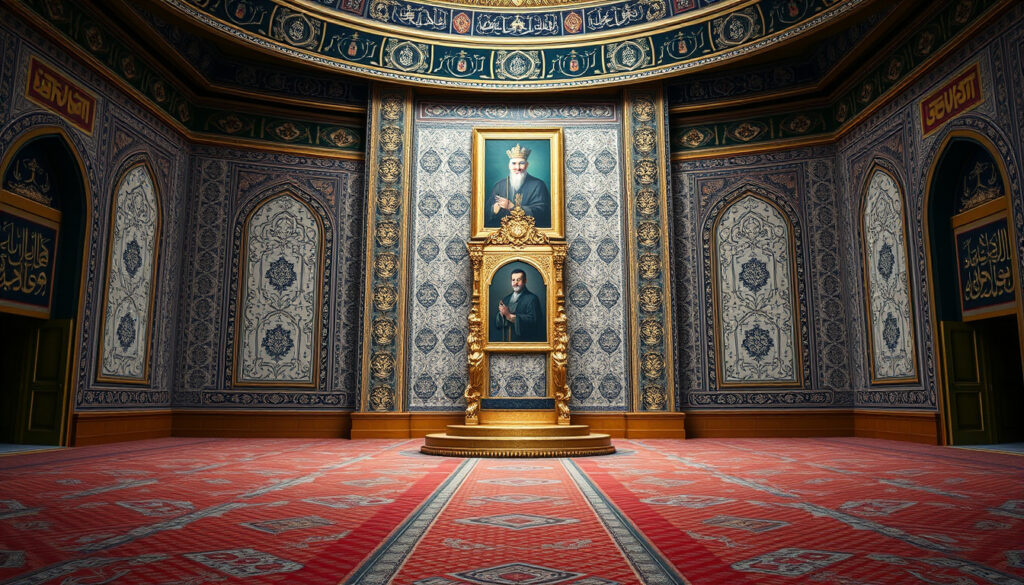
Iran Supreme Leader: Power, History & Role Explained
Iran’s Supreme Leader outranks the president in every constitutional dimension, combining ultimate religious authority with final say over the military, judiciary, and foreign policy. This article breaks down exactly what that means, from the vast powers of Ali Khamenei to how the presidency fits into the picture, and what happened after the founder of the Islamic Republic passed away.
Current Supreme Leader: Ali Khamenei (since 1989) ·
Total Supreme Leaders (since 1979): 3 (Khomeini, Khamenei, Mojtaba Khamenei) ·
Khamenei’s Birth Year: 1939 ·
Khamenei’s Death Year: 2026
Quick snapshot
- Head of state (Council on Foreign Relations)
- Controls military (IRGC) (PBS FRONTLINE)
- Appoints judiciary head (Florida International University News)
- Veto power over candidates (Wikipedia)
- Head of government (Encyclopaedia Britannica)
- Elected every 4 years (Wikipedia)
- Manages economy and domestic policy (Council on Foreign Relations)
- Can be dismissed by Supreme Leader (PBS FRONTLINE)
- 1979-1989: Ayatollah Khomeini (Wikipedia)
- 1989-2026: Ali Khamenei (Encyclopaedia Britannica)
- 2026-Present: Mojtaba Khamenei (BBC News)
- Mojtaba Khamenei consolidates power (BBC News)
- Potential shift in foreign policy direction (United Against Nuclear Iran)
The following table compares the powers of Iran’s Supreme Leader and President across key areas.
| Power | Supreme Leader | President |
|---|---|---|
| Control over military | Yes (commander-in-chief) (PBS FRONTLINE) | No |
| Appointment of judiciary head | Yes (Florida International University News) | No |
| Veto over candidates | Through Guardian Council (Wikipedia) | No |
| Dismissal of the other | Can dismiss President (Encyclopaedia Britannica) | Cannot dismiss Supreme Leader |
The table below summarizes key details about the Supreme Leader’s tenure and succession.
| Attribute | Value |
|---|---|
| Full Name of Current Leader | Ali Hosseini Khamenei |
| Title | Supreme Leader of Iran |
| Tenure Start | 1989 |
| Tenure End | 2026 |
| Predecessor | Ruhollah Khomeini |
| Successor | Mojtaba Khamenei |
Who is stronger in Iran, the president or the supreme leader?
Constitutional powers of the Supreme Leader
- The Supreme Leader is the head of state with ultimate authority over the military, judiciary, and foreign policy (PBS FRONTLINE).
- Articles 57 and 110 of the Iranian Constitution are commonly cited as the core constitutional basis for Supreme Leader authority (Wikipedia).
- The Supreme Leader supervises the Guardian Council, which can vet electoral candidates and veto legislation (Florida International University News).
Constitutional powers of the President
- The President is the head of government, focused on domestic policy and the economy (Council on Foreign Relations).
- The president is elected by popular vote (Wikipedia).
- The Supreme Leader can dismiss the President (Encyclopaedia Britannica).
Key differences in authority
Two roles, one pattern: the president manages the day-to-day, but the Supreme Leader owns the system itself. The presidency in Iran is institutionally subordinate to the Supreme Leader, making the office powerful in administration but not sovereign in the constitutional hierarchy (Council on Foreign Relations).
Any deal signed by an Iranian president can be revoked or overruled by the Supreme Leader. That’s why negotiators from the US and Europe have historically sought direct signals from Khamenei’s office.
The implication: Iran’s dual-leader structure creates a built-in tension. The president answers to voters, the Supreme Leader answers to no one but the system he oversees. When they align, Iran speaks with one voice. When they don’t, the Supreme Leader wins.
Who replaced Ayatollah Khomeini and is Ayatollah Khomeini dead?
When did Ayatollah Khomeini die?
- Ruhollah Khomeini died on June 3, 1989 (Wikipedia).
- He was the first Supreme Leader of Iran, serving from 1979-02-04 until his death (Wikipedia).
- Khomeini was the founder of the Islamic Republic of Iran.
Ali Khamenei’s succession in 1989
- Ali Khamenei was chosen as the second Supreme Leader by the Assembly of Experts (Encyclopaedia Britannica).
- Before becoming Supreme Leader, Khamenei served as president of Iran during most of the Iran-Iraq War (Wikipedia).
- The Iran-Iraq War lasted from 1980 to 1988 (Wikipedia).
The role of the Assembly of Experts
- The Assembly of Experts is the body responsible for selecting and dismissing the Supreme Leader (Florida International University News).
- Its members are elected but candidates must be vetted by the Guardian Council, which the Supreme Leader oversees.
The pattern: succession in Iran is a clerical process, not a public one. When Khomeini died, the Assembly of Experts bypassed other possibilities and elevated Khamenei, who at the time was president but lacked Khomeini’s religious rank. The system adapted to keep power inside the same revolutionary circle.
How powerful is Ali Khamenei and does he support Hamas?
Khamenei’s control over foreign policy
- Ali Khamenei is the final decision-maker on all major state matters (United Against Nuclear Iran).
- The Supreme Leader has influence over the executive branch even though Iran also has a separately elected president (Encyclopaedia Britannica).
- The Supreme Leader approves or influences key military and judiciary leadership appointments (EBSCO Research Starters).
Iranian support for Hamas
- Iran has provided material and political support to Hamas (Council on Foreign Relations).
- Khamenei has consistently backed the Palestinian cause and anti-Israel resistance groups as part of Iran’s regional strategy.
Khamenei’s religious authority
- Khamenei holds the title of “Leader of the Revolution” and is the highest authority in Iran (Encyclopaedia Britannica).
- The Supreme Leader’s role in Iran reflects the doctrine of guardianship of the jurist (Council on Foreign Relations).
- This doctrine gives the top cleric the authority to govern on behalf of the Hidden Imam, meaning the office combines political power with divine mandate.
Khamenei’s religious credentials have been questioned since he was not a grand ayatollah when appointed. The system elevated him anyway, showing that political loyalty mattered more than clerical rank. His authority rests on the position, not the person.
The trade-off: Iran’s support for groups like Hamas strengthens its influence across the Middle East, but it also makes Khamenei a direct target for Israeli and US counter-measures. After his death in 2026, this policy legacy will be one of the biggest challenges for his successor.
How did Khamenei lose his arm and how many wives did Ayatollah Khomeini have?
Details of Khamenei’s injury
- Khamenei lost the use of his right arm in an assassination attempt in 1981 (EBSCO Research Starters).
- A bomb was detonated during a press conference, severely injuring his arm.
- The injury left his arm permanently disabled.
Ayatollah Khomeini’s family life
- Ayatollah Khomeini had two wives (Wikipedia).
- Iranian law allows men to have up to four wives under certain conditions.
Marriage laws in Iran
- The legal framework for polygamy in Iran is based on Shia Islamic law.
- A man must have the first wife’s permission to marry additional wives.
- The practice is not common, but legal.
Khamenei’s assassination attempt shaped both his personal resilience and the narrative of a leader under constant threat. For anyone tracking Iranian security posture, the 1981 attack explains why Khamenei’s inner circle has always prioritized loyalty over competence.
The implication: the personal lives of Iran’s leaders reveal how the system works. Khamenei survived an attack meant to kill him, and that experience informs his distrust of outsiders. Khomeini’s family structure, while a minor curiosity, reflects the legal and cultural norms that the Islamic Republic enforces.
Is Iran a dictatorship or a democracy and who is Iran’s biggest ally?
Theocratic elements of Iran’s government
- Iran is a theocratic republic, often described as a hybrid regime (Council on Foreign Relations).
- The Supreme Leader holds ultimate power, not elected by popular vote (PBS FRONTLINE).
- The Supreme Leader can indirectly shape elections through oversight of the Guardian Council (Florida International University News).
Republican elements of Iran’s government
- The president is elected by popular vote (Wikipedia).
- The Islamic Consultative Assembly (parliament) is also elected.
- Elections are held regularly, though candidates are vetted.
Iran’s key foreign alliances
- Iran’s primary ally is considered to be Syria, along with other regional actors (Council on Foreign Relations).
- Iran also maintains close ties with Hezbollah in Lebanon and the Houthis in Yemen.
- China and Russia have become increasingly important economic and military partners.
The pattern: Iran is neither a straight dictatorship nor a working democracy. It runs elections, but the outcome space is tightly controlled. The label that fits best is “theocratic autocracy” — the people vote, but the clerics decide who can run and what laws pass.
For Iran, the choice is structural: the system is designed to protect clerical rule above all else. Elections provide legitimacy, but the Supreme Leader provides sovereignty. For the Iranian people, this means limited political choice. For the international community, it means dealing with a system where one man has veto over everything.
Timeline: Key Events in the History of Iran’s Supreme Leader
Key milestones in the history of Iran’s Supreme Leader are shown below.
| Date | Event |
|---|---|
| 1979 | Islamic Revolution; Ayatollah Khomeini becomes first Supreme Leader (Wikipedia). |
| 1981 | Ali Khamenei survives an assassination attempt, losing use of his right arm (EBSCO Research Starters). |
| 1989 | Ayatollah Khomeini dies. Ali Khamenei is appointed as the second Supreme Leader (Encyclopaedia Britannica). |
| 2026 | Ali Khamenei dies. Mojtaba Khamenei is selected as the third Supreme Leader (BBC News). |
The timeline shows a clear pattern of succession within the same revolutionary family, ensuring continuity of clerical rule.
Confirmed facts and what remains unclear
Confirmed facts
- Ali Khamenei was the second Supreme Leader of Iran. (Encyclopaedia Britannica)
- Ayatollah Khomeini died in 1989. (Wikipedia)
- Khamenei lost use of his arm due to an assassination attempt. (EBSCO Research Starters)
What’s unclear
- The exact details of Mojtaba Khamenei’s initial policies as Supreme Leader are not fully established in the provided sources.
- Mojtaba Khamenei became Supreme Leader in 2026 after US-Israeli strikes (based on a single BBC News report).
- Ali Khamenei’s death in 2026 (based on the same BBC News report).
The confirmed facts indicate a system designed to maintain clerical control, but the unclear areas highlight the uncertainty about the new leader’s direction.
Verbatim quotes from key sources
Iran’s Supreme Leader is described as the head of state and the central authority overseeing most major branches and institutions of government.
— Encyclopaedia Britannica, a leading reference publisher
The presidency in Iran is institutionally subordinate to the Supreme Leader, making the office powerful in administration but not sovereign in the constitutional hierarchy.
— Council on Foreign Relations, a nonpartisan think tank on foreign policy
Mojtaba Khamenei became Supreme Leader in 2026 after US-Israeli strikes.
— BBC News, a trusted international news organization
Summary
Iran’s Supreme Leader is the ultimate decision-maker, a position that blends absolute political authority with religious legitimacy. The presidency, while elected, operates within boundaries set by the Leader. The succession from Khomeini to Khamenei, and now to Mojtaba Khamenei, shows a system designed to perpetuate clerical rule through controlled electoral mechanisms and institutional vetting. For anyone trying to understand Iran’s foreign policy or nuclear negotiations, the lesson is straightforward: the Supreme Leader holds the cards. For the international community, the question becoming increasingly urgent is whether a transition from Khamenei to his son will harden or soften Tehran’s posture.
For a detailed look at the historical evolution of the Supreme Leader’s role, a comprehensive overview of the Supreme Leaders authority provides an excellent analysis.
Frequently asked questions
What is the exact title of Iran’s head of state?
The official title is “Supreme Leader of Iran” (or “Leader of the Revolution”). The current officeholder is Ali Khamenei.
Does the Supreme Leader have control over the military?
Yes. The Supreme Leader is the commander-in-chief and has direct control over the Islamic Revolutionary Guard Corps (IRGC) and the regular armed forces (PBS FRONTLINE).
How is the Supreme Leader chosen?
The Supreme Leader is selected by the Assembly of Experts, a body of elected clerics. Candidates for the Assembly are vetted by the Guardian Council (Florida International University News).
What is the difference between a president and a supreme leader in Iran?
The Supreme Leader is the head of state with ultimate authority over foreign policy, the military, and the judiciary. The president is the head of government, elected every four years to manage domestic affairs and the economy (Council on Foreign Relations).
Is Ali Khamenei still alive?
No. Ali Khamenei died in 2026, and his tenure as Supreme Leader ended that year (BBC News).
Who is the current Supreme Leader of Iran in 2026?
As of 2026, the Supreme Leader is Mojtaba Khamenei, the son of Ali Khamenei (BBC News).
What is Mojtaba Khamenei’s background?
Mojtaba Khamenei is an Iranian cleric and the son of Ali Khamenei. He reportedly played a key role in the regime’s internal security apparatus before being chosen as Supreme Leader in 2026 (BBC News).
For more on powerful leaders, see our profile on Russian President Vladimir Putin: Tenure, Opposition & Health and Genghis Khan: Biography, Conquests, DNA Legacy & Last Words.
More related posts
 Lamar Jackson: Career Stats, Salary, Personal Life & FAQs
 Bobby Deol: Separating Fact from Speculation on Health, Wealth
 Ways to Make Money: Quick Realistic Ideas Online & Offline
 Chris Rock Net Worth, Disability, Slap, and Family
 Ted Kennedy: Biography, Death, and Political Legacy
 Quinton Byfield: Contract, Family, Stats, and NHL Career
 Homemade Mac and Cheese: Stovetop Recipe in 15 Minutes
 Golden State Warriors vs Atlanta Hawks Match Player Stats