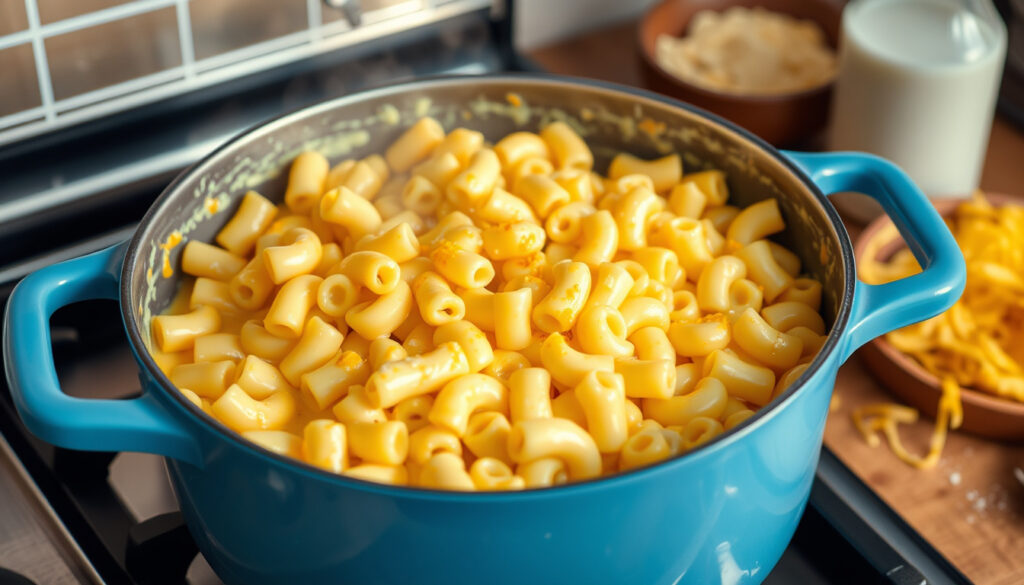
Homemade Mac and Cheese: Stovetop Recipe in 15 Minutes
Boxed mac and cheese is a proven disappointment—sauce that breaks, pasta that turns mushy, and flavor that tastes nothing like the real thing. The stovetop method takes about 15 minutes and produces silky results no convenience option can match, while the baked classic delivers a crispy top that converts a simple dish into something genuinely worth anticipation. This guide cuts through the guesswork with mistake-proof techniques that separate the runny disasters from the silky successes.
8 Ingredients: Stovetop in 15 minutes · Multiple Cheeses: Cheddar-based creamy sauce · Baked Option: Panko-Parmesan topping · Classic Method: Bite-size pasta baked · Contest-Winning: Rich layered cheeses
Quick snapshot
- Stovetop takes 15 minutes per top recipe (Cheese Professor)
- Roux cooks in 4-5 minutes (Chefs Notes)
- Bechamel simmers at least 10 minutes (Chefs Notes)
- Exact cheese blend ratios for best melt
- Regional variation impact on texture
- Precise timing for pasta undercooking in baked versions
- Stovetop raw pasta simmer method popularized in blog era
- Al dente standard emphasized for baked mac
- Anti-caking agent issue in pre-shredded cheese noted in contemporary advice
- Mastering stovetop creamy sauce technique
- Baking with crispy Panko-Parmesan topping
- Avoiding the five biggest mistakes
The table below consolidates verified timing and ingredient specifications from multiple culinary sources.
| Key fact | Value | Source |
|---|---|---|
| Prep Time | 15 minutes | Cheese Professor |
| Roux cooking time | 4-5 minutes | Chefs Notes |
| Bechamel simmer time | 10 minutes minimum | Chefs Notes |
| Baking temperature | 350°F | Chefs Notes |
| Baking time (cold mac) | 20-30 minutes | Chefs Notes |
| Key Ingredients | Pasta, cheddar, milk | Fresh April Flours |
| Standard pasta amount | 1 pound (454g) elbow macaroni | Fresh April Flours |
| Roux roux limit per Rachael Ray | 5 minutes maximum | The Takeout |
| Cook Method | Stovetop or baked | Fresh April Flours |
| Topping Option | Panko-Parmesan | The Takeout |
What ingredients do I need for mac and cheese?
Building a solid mac and cheese starts with eight ingredients and a stovetop timeline of about 15 minutes (Cheese Professor). That’s it—no fancy upgrades, no obscure seasonings. The magic is in how you handle them.
Core pantry staples
- 1 pound (454g) elbow macaroni (Fresh April Flours)
- 2 Tablespoons (28g) butter for roux (Fresh April Flours)
- 2 Tablespoons (15g) flour for roux (Fresh April Flours)
- 2 cups whole milk (full-fat required for sauce stability) (Huge Mistakes)
- Sharp cheddar cheese, freshly shredded
- Salt for pasta water
Cheese selection basics
A cheddar-based sauce delivers the creamy, slightly sharp profile that makes mac and cheese work. The Takeout notes that pre-shredded cheese contains anti-caking agents that cause a pasty or sandy texture when melted—skip it (The Takeout). Always shred from a block for smooth melting.
3-ingredient minimal version
Serious Eats offers a stripped-down approach using just pasta, cheese, and liquid—no elaborate roux required. The technique relies on the pasta water’s starch and careful cheese incorporation to build creaminess without a flour base.
The 3-ingredient approach works best for those short on time, though the roux-based version delivers more consistent results across different skill levels.
What kind of cheese is best for making mac and cheese?
Cheese is an emulsion, and emulsions need to be treated gently (Cheese Professor). Understanding which cheeses melt smoothly and which fight you the whole way determines whether your sauce stays silky or breaks into a greasy mess.
Top melting cheeses
- Sharp cheddar — primary cheese, excellent melt and flavor
- Gruyère — superior melting, nutty flavor
- Monterey Jack — mild, stretches beautifully
- Fontina — rich, gooey texture
- Colby — good melt, mild flavor
Blend ratios for creaminess
Chefs Notes recommends combining two or three cheeses for complexity while maintaining creaminess. A standard starting point: 60% cheddar for base flavor, 20% Gruyère for melt quality, and 20% Monterey Jack for stretch. Add cheese gradually—one handful at a time—to prevent splitting or oil separation (Huge Mistakes).
Cheeses to avoid
- Feta and gorgonzola — crumbly, high moisture, poor melt (Fresh April Flours)
- Pre-shredded cheese — anti-caking additives prevent smooth melt
- Low-fat cheese varieties — poor melt, rubbery texture
- Fresh pasta in sauce — turns into sticky clump (Huge Mistakes)
When selecting cheeses, prioritize those with low moisture content and good melting properties—aged cheddar and Gruyère outperform fresh varieties that tend to clump rather than blend smoothly.
Block-shredded cheddar dominates for good reason: it melts smoothly and delivers clean flavor. Any high-quality, dry-aged block from the deli counter beats the bagged stuff every time.
What is the secret to a good mac and cheese?
The secret lives in the sauce technique—a properly built roux, patient bechamel, and the right pasta-to-sauce ratio. Tasting Table identifies 12 game-changing tips that separate the silky from the sad (Tasting Table). The crunchy Panko topping on baked versions adds the textural contrast that makes a bowl genuinely satisfying.
Sauce technique
Not using a roux leads to an unstable sauce. Chefs Notes specifies the method: melt butter, whisk in equal flour, and cook for 4-5 minutes (Chefs Notes). Going any longer than 5 minutes makes the roux overcooked, which according to Rachael Ray will make your cheese sauce feel grainy (The Takeout).
- Melt butter over medium heat
- Add flour gradually, whisking constantly
- Cook roux until it smells nutty, 4-5 minutes
- Add cold milk slowly, whisking to prevent lumps
- Simmer bechamel for at least 10 minutes to eliminate raw flour taste (Chefs Notes)
- Remove from heat before adding cheese
Pasta cooking trick
Cooking pasta al dente means the pasta is cooked through but retains a slight bite. The phrase al dente means “to the tooth” (Tasting Table). Salt the pasta water heavily—failing to salt pasta water leads to bland pasta (Tasting Table). Do not rinse pasta; you need the surface starch for the sauce to stick (Fresh April Flours).
Baking vs stovetop
Stovetop prioritizes a creamy sauce without any drying risk. Baked mac and cheese needs undercooked pasta and a looser sauce to account for the additional oven time (Cheese Professor). The oven finishes both the pasta and the top crust. If you’re short on time, The Takeout notes that you can use a broiler for quick top browning in under 10 minutes (The Takeout).
Undercooking bechamel imparts a raw floury taste—the simmer time exists for a reason. For stovetop, 10 minutes of patient whisking transforms a thin liquid into a coating sauce base.
What are common mistakes when making mac and cheese?
Cheese Professor catalogs five specific pitfalls that ruin otherwise promising batches (Cheese Professor). Tasting Table expands this to 12 mistakes, including pasta water handling and the al dente standard (Tasting Table). Avoiding these habits transforms your mac and cheese from mediocre to memorable.
Overcooking pasta
Overcooking pasta to beyond al dente results in soggy cheese sludge (Tasting Table). On the stovetop, overcooked pasta wilts further when tossed with hot sauce. In the oven, the pasta continues cooking for another 30-45 minutes, absorbing moisture. The Takeout emphasizes boiling to al dente or slightly under to compensate (The Takeout).
Sauce separation
Cheese sauce breaks if heated too quickly or too long, causing separation of liquid from milk solids. Botched by Babish demonstrates this live: add cheese last on stovetop and reheat over low heat with constant stirring (Botched by Babish). Overheating sauce after reaching desired thickness makes it thin and watery—remove from heat before adding cheese.
Wrong cheese choices
Pre-shredded cheese has anti-caking agents causing a pasty or sandy texture when melted (The Takeout). Poor cheese choices like low-melt varieties ruin creaminess (Chefs Notes). Fresh pasta turns into a sticky clump—use quality dry pasta only (Huge Mistakes).
Too much liquid
Too much liquid makes sauce runny like soup (The Takeout). Thicken with cornstarch, flour, or extra oven time. The fix is straightforward: start with less liquid than you think you need, and add more only if the sauce seems too thick.
The pattern is consistent: overworking the sauce at high heat causes the emulsion to collapse, leaving you with a broken, greasy mess instead of silky cheese coating every noodle.
Adding milk too fast to roux causes lumps—add gradually to avoid screwing up the sauce (Botched by Babish). This single habit prevents most texture disasters.
What is the trick to keeping mac and cheese creamy?
Keeping mac and cheese creamy comes down to three interlocking habits: building a proper roux foundation, adding cheese at the right moment, and managing pasta heat. Fresh April Flours walks through a stovetop method where the pasta simmers directly in the sauce for 6 minutes—a technique that keeps everything cohesive and prevents separation (Fresh April Flours).
Roux foundation
The roux is non-negotiable for baked mac and cheese. Chefs Notes spells out the proportions: 2 Tablespoons butter, 2 Tablespoons flour, cooked for 4-5 minutes until the mixture smells nutty and loses its raw flour smell (Chefs Notes). This starch-thickened base holds the sauce together through oven heat without breaking.
Cheese addition method
Add cheese little by little to prevent splitting or oil separation (Huge Mistakes). Keep pasta hot after cooking by covering with a towel or briefly reheating before adding to sauce to prevent sauce breaking (Chefs Notes). A cold pasta shock kills sauce consistency instantly.
Post-bake reheating
Overbaking or high temperature dries out the dish; Chefs Notes specifies baking cold mac and cheese at 350°F for 20-30 minutes (Chefs Notes). When reheating leftovers, add a splash of milk and cover tightly to trap steam and restore moisture without overcooking.
How to make mac and cheese (step-by-step)
Two methods exist: a quick stovetop version ready in 15 minutes and a baked classic with a crispy top. Both start with the same roux-based sauce—the baking variation just adds a Panko-Parmesan crust and extra oven time.
Stovetop method (15 minutes)
- Boil salted water — Bring a large pot of water to a rolling boil. Salt heavily until it tastes like the sea.
- Cook pasta to al dente — Elbow macaroni cooks in about 7-8 minutes. Drain and reserve 1 cup pasta water before rinsing.
- Build roux — In the same pot over medium heat, melt 2 Tablespoons butter. Whisk in 2 Tablespoons flour. Cook 4-5 minutes, stirring constantly, until nutty-smelling.
- Make bechamel — Add 2 cups cold milk gradually, whisking constantly. Bring to a gentle simmer and cook at least 10 minutes, whisking frequently, until thickened.
- Season the sauce — Add salt, pepper, and optionally a pinch of mustard powder or hot sauce. Not flavoring bechamel leads to bland sauce (Chefs Notes).
- Add cheese off heat — Remove pot from heat. Add shredded cheese one handful at a time, stirring until fully melted before adding more.
- Combine and adjust — Add drained pasta and stir. If sauce seems thick, add reserved pasta water a tablespoon at a time until silky.
Baked method (40 minutes total)
- Undercook pasta by 2 minutes — Baked mac finishes in the oven. Start with slightly underdone pasta to prevent mushy texture (Cheese Professor).
- Build sauce looser than usual — The oven will evaporate moisture. Add an extra ¼ cup milk to compensate.
- Combine and transfer — Mix pasta and sauce. Pour into a buttered 9×13 baking dish.
- Make Panko topping — Mix ½ cup Panko breadcrumbs with 2 Tablespoons melted butter and ¼ cup Parmesan. Season with salt and pepper.
- Top and bake — Sprinkle Panko mixture evenly over mac. Bake at 350°F for 20-30 minutes until golden and bubbling at edges.
- Broil for extra crisp — Switch to broiler for the final 3-5 minutes for a deeply golden crust (The Takeout). Watch closely—under 10 minutes prevents burning.
- Rest before serving — Let stand 5 minutes. The sauce sets slightly and portions hold together better.
“Cheese is an emulsion, and emulsions need to be treated gently.”
— Stiavetti, Cheese expert (Cheese Professor)
“Going any longer than this can overcook your roux, which according to Rachael Ray, will make your cheese sauce feel grainy.”
— Rachael Ray, Chef (The Takeout)
“Cooking pasta al dente means the pasta is cooked through but retains a slight bite. The phrase al dente means ‘to the tooth.'”
— Tasting Table, Food publication (Tasting Table)
Related reading: daily egg limits · lower cholesterol with meal plans
Home cooks often refine their technique using insights from the creamy stovetop guide, which highlights ideal cheeses for that signature sauce texture.
Frequently asked questions
Can I use pre-shredded cheese for mac and cheese?
Avoid pre-shredded cheese. It contains anti-caking agents that prevent smooth melting, producing a pasty or grainy texture instead of a silky sauce. Shred cheese fresh from a block—any decent deli counter will do this for you if you ask.
How do I reheat homemade mac and cheese?
Add a splash of milk, cover the dish, and heat on medium power in 30-second intervals. The steam trapped under the cover restores moisture without overcooking. For baked versions, the oven at 350°F for 20-30 minutes works, but the microwave with a damp paper towel over the top is faster and equally effective.
Is evaporated milk better for mac and cheese sauce?
Evaporated milk provides extra richness and a slightly thicker sauce due to reduced water content. Some recipes prefer it for that reason. Regular whole milk works perfectly fine—the difference is marginal unless you’re chasing a very specific restaurant-style thickness.
Can I make mac and cheese vegan?
Vegan mac and cheese requires plant-based cheese alternatives or a cashew-based sauce. Most store-bought vegan cheeses melt inconsistently, but homemade nut-based sauces (blended cashews with nutritional yeast, turmeric, and lemon) produce decent results. The texture and stretch won’t match the dairy version, but the flavor can come close.
How much pasta for mac and cheese?
The standard batch uses 1 pound (454g) of elbow macaroni, which yields about 8 servings. That’s roughly 2 cups cooked pasta per person as a side dish, or generous single portions when it’s the main course.
Does mac and cheese freeze well?
Baked mac and cheese freezes reasonably well for up to three months. Cool completely, cover tightly, and freeze. Thaw overnight in the refrigerator. Reheat covered at 350°F for 30-40 minutes until bubbling throughout. The sauce may separate slightly, but it’s still edible. Stovetop versions don’t freeze well due to their softer texture.
What pasta shape is best for mac and cheese?
Elbow macaroni is the classic choice because the curved shape holds sauce in every crevice. Other viable options include cellentani (spirals), cavatappi (twists), and shells—all trap sauce effectively. Avoid long pasta shapes like spaghetti or linguine, which tangle and don’t hold sauce well.
The difference between a boxed disappointment and a homemade triumph comes down to technique, not talent. A roux cooked for the right amount of time, cheese added off the heat, and pasta cooked precisely to al dente—these habits produce a creamy, cohesive result that no convenience option can match. For weeknight dinners, the stovetop method delivers restaurant-quality comfort in 15 minutes flat. For special occasions, the baked version with its golden Panko crust converts a simple dish into something genuinely worth anticipation.
More related posts
 Old Dutch Chips Recall Canada: Ridgies Milk Allergen Alert
 Oklahoma City Thunder vs Denver Nuggets Match Player Stats – Box Score & Leaders
 TD ATM Near Me – Locator, Fees and Access Guide
 Apple Customer Service Canada – Phone Numbers and Support Guide
 Liverpool vs Man United – Match Preview and Key Stats
 Adidas Adios Pro 4 – Release Date, Specs and Buying Guide
 Find an Obituary for a Specific Person – Complete Online Guide
 Deportivo Alavés vs Real Madrid Standings: H2H Record & History